The business cannot explain itself in one strong line
Capability
Brand Messaging & Positioning
For businesses that are valuable, but sound too generic, vague, or similar to competitors.
Most businesses do not struggle because they have nothing good to offer.
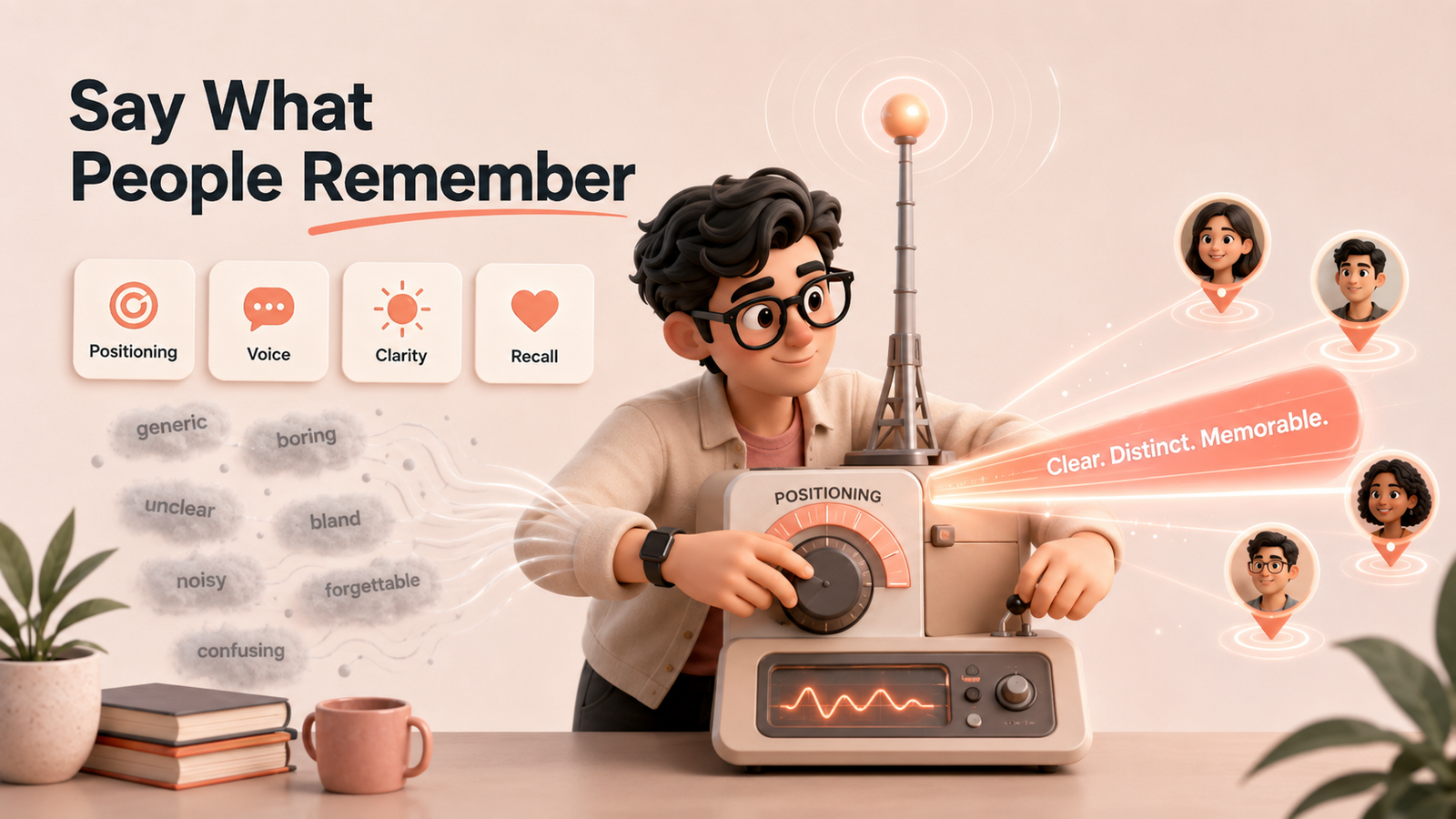
Start With The Problem
Why you may need this
Most businesses do not struggle because they have nothing good to offer.
They struggle because they explain it badly.
The message becomes full of safe words: trusted, quality, best, reliable, customer-focused, affordable, innovative. These words are not wrong, but they are overused. They do not show what actually makes the business worth remembering.
That is where brand messaging matters.
Common Friction
Where things usually break
USPs sound like everyone else's USPs
The brand story is either too emotional or too corporate
The audience does not immediately understand the relevance
The tone changes across platforms
The message has claims but no sharp proof
My Role
How I help
I understand the business, audience, market, difference, proof, personality, and commercial goal. Then I shape messaging that makes the brand easier to understand, trust, and remember.
Scope And Output
What I can deliver
Taglines
Slogans
Value propositions
USPs
Brand story
Company profile content
Mission and vision
Founder message
Elevator pitch
Tone direction
How The Work Moves
My execution process
This process is specific to Brand Messaging & Positioning. The steps change around what this capability must solve before writing begins.
Understand
I first understand the business, audience, market, offer, personality, proof, difference, emotional appeal, and what the brand should be remembered for.
Diagnose
I check where the message sounds generic, vague, overused, unsupported, inconsistent, too corporate, or too similar to competitors.
Research
I study competitors, customer language, industry expectations, buyer doubts, proof points, founder inputs, and the claims the brand can genuinely own.
Build
I shape the positioning base: audience, problem, difference, proof, promise, tone, tagline direction, and the message hierarchy.
Write
I write taglines, value propositions, USPs, brand story, profile copy, mission lines, founder message, and voice-aligned brand content.
Review
I review the messaging for clarity, memorability, proof strength, tone consistency, audience fit, and whether it sounds specific instead of decorative.
What Should Improve
Expected outcomes
Audience
Problem
Difference
Proof
Promise
Voice
Questions Worth Resolving
FAQs
Yes. I can create short brand lines, but only after understanding what the business actually needs to communicate.
Yes, if the business has the proof to support that positioning. Premium language without proof feels fake.
Yes. I can refine, reposition, or rebuild existing brand messaging.
Messaging Clarity
Need sharper language for what makes the brand different?
Tell me what you currently say and what people still misunderstand. I will work through audience, problem, difference, proof, promise, and voice before shaping the message.